 Reviewing a game like Dragon Quest ($2.99) is never easy. First of all, as many of you probably do, I have a very deep childhood connection to this game, which means it’s a nostalgic trip for me every time I play it. Then there’s the fact that this is a genre-defining game, and as a result, can’t possibly be expected to be as refined as the games that followed in the path it carved out. Ultimately, this game is both a classic and a curio, a piece of history that feels like one, no matter how much Square Enix tries to pretty it up. Its age is in its fundamental structure. I think it holds up very well relative to other games from its era, but that’s perhaps faint praise, given the state of console RPGs in 1986. A completely new player without any sort of fondness for the history of the series would be better off checking out Dragon Quest 4 ($14.99) first. That doesn’t mean that the first Dragon Quest has nothing to offer, but it’s probably not the best way to break the ice in 2014.
As usual, though, a little bit of history first. This is the game originally known to many an English gamer as Dragon Warrior, a title adopted to avoid legal conflicts with TSR, the then-owners of Dungeons & Dragons. A lot of North American kids had this in their NES libraries, though precious few actually handed over money at a shop for it. Nintendo, the American publisher, widely overestimated the game’s potential sales and were left with tons of unsold cartridges. These were distributed as a free bonus for subscribing to Nintendo Power, something a heck of a lot of kids were doing anyway. Nintendo would take a more careful approach in publishing their next overseas RPG hope, Final Fantasy ($7.99), but given Dragon Quest‘s notoriety, it’s easy to see why Nintendo was bullish on it.
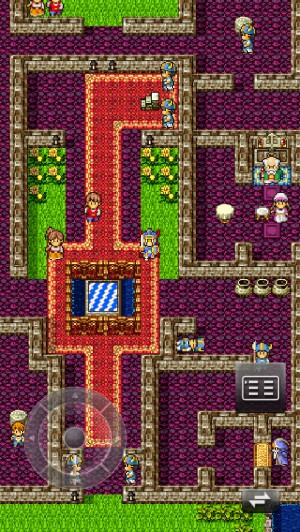 Contrary to popular lore, Dragon Quest was not the actual first JRPG. It might be accurate to say it was the first really good one, however, and it certainly set down a blueprint that the genre followed. By the time Dragon Quest began development, games like the pen and paper Dungeons & Dragons, Ultima, and Wizardry were all fairly popular with a certain subset of Japanese gamers, along with Henk Rogers’ The Black Onyx and Falcom’s Dragon Slayer games. Dragon Quest series creator Yuji Horii enjoyed those games, and wanted to make a more accessible game along similar lines. Grabbing the menu system from his previous adventure game Portopia Serial Murders, the overhead exploration of Ultima, the first-person battles of Wizardry, the artist from the then-recent manga Dragon Ball, and television composer Koichi Sugiyama, Yuji Horii put together his game that would change everything.
The idea was to simplify the extremely complex systems of RPGs, but still offer the player the satisfying feeling of following the story of a character who becomes stronger the more you play. That’s just what Horii did, cutting away things like party members and job classes, leaving just a single hero with a simple goal: Defeat that jerk on the other side of the lake who’s ruining things for everyone. Granted, getting to the other side of the lake involves a trip around the world, but it wouldn’t be much fun if the hero just built a canoe or something, would it? That’s basically the game, though. You travel clockwise around the world, sniff out a few magical items, rescue a princess, get to level 17 or 19 depending on how bold you are, and knock off the evil Dragonlord.
It’s not a very long game by modern standards, and its even shorter in its current form. In its original form, Dragon Quest involved a lot of grinding. The game is basically unwinnable without the spell you get at level 17, so no matter how fast or slowly you reached the final castle, you still had to get yourself up to level 17. You also needed to grind to afford the gear necessary for survival. From the Super Famicom remakes onward, the enemies in Dragon Quest give a much better experience point and gold reward, reducing most of the need for grinding. With that drudgery removed, the game is over in mere hours if you know where you’re going. I’d be awfully surprised if anyone took longer than 10 hours to get to the end, and most will finish well before that.
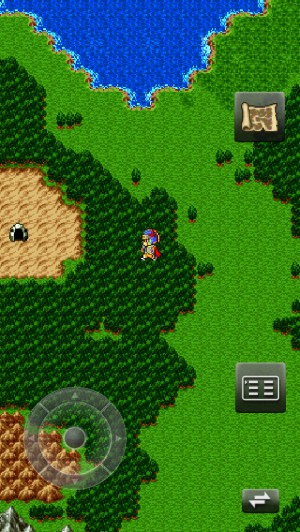 Clearly, Horii’s plan to make the genre less intimidating to the average player went over very well, and later games in the series were able to slowly build complexity. It’s probably impossible to overestimate what this game did for the genre, and that makes it a very important game. Important games are not always good in a modern context, though. Dragon Quest is still a very enjoyable game for me, and I replay it fairly often, but I’m not sure how much of that is on the game’s lasting merits and how much is just my own nostalgia. It’s all very sound, if very primitive, and certain elements, like Akira Toriyama’s spectacular monster designs and Sugiyama’s wonderful music, haven’t aged a day. Other things haven’t aged as gracefully.
There are no elements of customization whatsoever to your character. The list of equipment is very small and really just consists of stuff in each new town being better than the stuff in the last town. Battles offer very little strategy. You’re either strong enough to survive, or you’re not. If you’re not, you have little recourse but to level up more or buy new gear. The closest thing to battle tactics you have at your disposal is the ability to put enemies to sleep. Abuse that, by the way, it works a wonder in this game. There are no subquests, few characters to speak of, and a whole lot of old-school design in locating the key items needed to beat the game. It’s not a particularly friendly game by modern standards, which is kind of funny given its design roots.
This particular port is based on a Japan-only feature phone version, itself a remake of the Game Boy remake of the Super Famicom remake of the original. Phew, that’s a lot of remaking. Mechanically, it’s not too different from the last version we saw in English, the Game Boy Dragon Warrior I & II collection. You can save your game anywhere in the field log, as opposed to the original only allowing you to save with the king in the starting castle. Experience point and gold yields are adjusted as in that version to smooth out the grinding. There are lots of ease-of-use changes so that you don’t have to go fishing in the menu constantly. The control interface will be familiar to anyone who played the iOS versions of Dragon Quest 4 and Dragon Quest 8 ($19.99), and the graphics are completely different from any prior version.
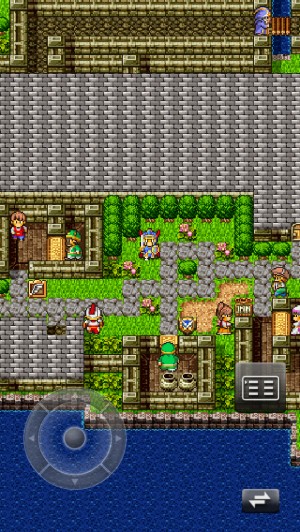 They’re very grainy, with sharp pixelated edges on everything, and I personally think it looks a lot worse than the Super Famicom version, but obviously a lot more rich and detailed than the NES original. The controls are a bit fussy since the original game is strictly tile-based, but they’re manageable enough once you get the hang of them. Like the other iOS Dragon Quest games, the game can only be played in portrait mode. I understand the reasoning and I personally prefer this mode, but I think Square Enix would be wise to consider providing options for those who would rather play in landscape. It’s probably the most frequent complaint I see about these versions.
The translation is quite interesting. While they opted to use neither the original NES translation nor the Game Boy one, it pays strong homage to the style of the original Dragon Warrior. Naming conventions have been reverted, so for example, the legendary hero Loto, who had his name changed to Erdrick in the NES version and went back to Loto in the GB version, is now once again known as Erdrick. Moreover, the whole game uses an old English style, but far more accurately than the original English version. I kind of like that they did this, because I think for a lot of people with fond memories of the game, that unique style of translation is something that stands out.
Dragon Quest is many things. It’s historically important, simple, fun, archaic, esoteric, nostalgia-inducing, genre-defining, focused, and mercifully brief. This port is decent enough, if not ideal, thanks to the somewhat-messy graphical style and the fiddly controls, which will be a much bigger problem come Dragon Quest 2, I promise. The price is, I suppose, about right for what Dragon Quest is. A classic, a museum piece, a nostalgia trip, and a reminder of just how much things can change, for better or worse, over the course of more than 25 years of game design advances. I think it’s a game best experienced in portable format these days, but even with that in mind, it’s still really only for those looking for a return to the most simple of times.


my sentiments exactly, combat and deck building is great but the inbetween is a killer especially if you're a completionist and have to explore every nook and cranny on a map.
I partially agree with the low walking speed but
a) FM addressed this issue and now it is faster after the last update (okay I know updates dont count for reviews)
b) there are several pieces of equipment which adding movement speed (I had +37% at max)
c) there is a relic which adds 50% movement speed while using it
I also don't know why it's unacceptable if you can't revive right before a boss? That's how it was when I've started playing games in general.
Died - back to the start of the level or even worse - Game Over.
Too much casuals around these days. :P
Unfortunately, toucharcade will not go back and update a review after a company addresses issues like the ones raised in this review. Another example.. Foursaken's Block Fortress War. The majority of issues raised by the reviewer were addressed by the bros in a patch. Did they update the review with the Impact the changes made? No.
If the game changes, the review should change and reflect that.. Especially with app gaming. I come to TA for all my iOS game reviews and news. If I find a game I'm interested in, I search that games name and review... If that review does not reflect updates that expand and fix a game, then I'm not getting an accurate review.
Real bummer.
I agree that reviews would be more useful in the long run if they were kept up to date with games. However I don't think it would be practically possible for TA to keep all the hundreds (probably thousands by now) of reviews on the site up to date with game updates. At best maybe they could update reviews with major changes to a game which come out very shortly after a review was written.
What seems more practical to me when there is an easily fixable flaw which mars an otherwise good game, is for the reviewer to put a little effort into considering how the game would be if that flaw were fixed, and mention that in their review. I've read several reviews by Shaun Musgrave where he's done that, basically said something to effect of "this flaw really mars the experience, but if it were fixed I'd add another star to the score because otherwise the game is really fun." Also if it's simple flaw he won't spend half the review talking about it. That makes the review more useful to me, because then he doesn't even need to update the review if the developer fixes the flaw, since he already described what he would have said if the flaw wasn't there.
I agree with that approach... If someone is wavering in a week or two on this game, they read this review and will be like, well crap, sounds like it's really slow.... After the patch that is submitted gets added, it will not reflect the current game.
I don't know best option... After the update, the speed will be fixed... Then, is it a 4? A 4.5? Then the text would be off..,
My personal way of solving the problem is, if I read a review of a game and it sounds like I'd like it except for some flaw the reviewer mentioned, then I'll check the update change notes for the app, or the app forums, to see if the problem has been fixed.
I believe that TouchArcade should just review the general release.
I mean, when a game comes out, it should already be extensively tested for quality, bugs, etc. If something is easily patch-able post-release, why wasn't this addressed before the game's wide release?
Sure, TA can hold off on reviews for 2 weeks. However, that would mean that it'd hard for TA to remain relevant in this day where instant reactions are demanded by the gaming public.
So if a game developer want to get great reviews, perhaps test their product extensively and address any issues before release.
The way to remedy this could be to put the responsibility on the developers of the apps to request an amendment to the reviews for their games if they manage to fix a major complaint. In this way, the reviewers don't need to update anything unless requested by a dev for his/her app.
I don't think any gaming site updates game reviews when patches are released. Never seen it, in my experience.
This is the most spot on TA review I've read. I absolutely despise the speed out of combat. The game feels half complete. The combat is soooooo fun though.
There is equipment that enables much faster movement.
Fair enough review, thanks Carter.
As some mentioned the move speed is getting a good buff in next update (among a bunch of other things like achievements, new special equipment, game stats, and more) - I think a lot of issues actually trickle down from that. The world for ex has a TON of secrets and places to explore, which should become more interesting and desirable to seek out with a faster move speed.
At any rate, thanks for those who have played so far: we definitely are listening, and we'll continue to tweak the game until its as good as we can make it!
Hear hear! Update the review! Do it exclusivly for foursaken! We know you love them, so give them this!
nice! and i also hope that they will update the review!
i really think phantom rift deserves it with some improvements beeing made.
the game is wonderful!
A few nit-picks -
1. They could do so much more with the battles if only you healed to full after each one and did away with needing to waste your orbs on healing out of battle.
2. Make the "phantom zones" an bit more alive by actually having buildings built out of existing assets (for example, the blocks and columns could easily be used in that way) with towns and characters that are more interesting than just balls of light.
3. Only showing the spells you have access to, for ease of introducing you to mechanics.
There are a bunch of little things that I think would go a long way in improving the experience.
Got to agree, wish I had waited for the review, and not gone off 'game of the week' and previews. This game has already been and gone from my ipad as it did nothing for me at all
I agree that a real killer in the game is having to go all the way back to the start if you run out of orbs but that's only until you build up enough orbs and your character then that doesn't happen anymore. I don't mind the speed walking around but it could be faster. But its that kind of game you do have to invest a lot of time into to get anywhere and that's not really good because not everyone has the time. Walking could be faster and after losing a boss fight you should respawn again at the same place without having to have mana or orbs. Going all the way back is a real turn off. But its a great game.
Very glad to see TA are being very impartial here although beforehand they said they love Foursaken games. It means we can rely on TA to call a spade a spade regardless of their personal likes. To be commended.
TA is pretty off the cuff in general, it's such a well run gaming blog compared to 90% of what's out there.
For me, one of the less amazing FM games. Also the first that I despise buying without waiting for a review first. I thought this would be cool, given it ended up as game of the week. Zzzz.
It looks so pretty in the video but tedious, in game play, so I didn't buy. What gets my "goat" it the unmitigated audacity people wanting a TA review re-written after updates. Insane.
Nope. It is sane.
If an update fundamentally changes the issues a reviewer had of a 1.0 release, it is not fair to leave that same review for 2.0. Maybe it fixes a major flaw, or doubles the content of the game... The original review is invalid. It is not the same game anymore.
When, for this reviewer, the game speed is too slow and Foursaken fixes that... That point, which is where the majority of negativity is pointed, is now moot. If the company fixed other issues.
I think a running addendum on games worthy of review is not a poor idea.. A 100 word write up saying hey, this update fixes what I just noted in the review or... Hey, this update actually makes the monsters smell worse... Etc.
If it's not the same game anymore then the developer messed up and released an unfinished product. That's not really fair to the reviewers. "the game speed was too slow" yeah, that was the product at the time. You as a consumer can make your own choices. For example, even if a game gets 1 out of 5 stars you can still like and enjoy playing it.
Actually, now that I think about it, TA does update things as certain games are patched. They did a quick write up for Wayward Soul when it's last update came out. So, there you go.
But they didn't go back and change the original review for Wayward Souls, which is what is being discussed. I wouldn't be surprised if TA posts an article when this game is updated as well, especially since TA has a history of being especially interested in Foursaken's games. However expecting TA to retroactively edit reviews as games get updated seems very unreasonable because it would mean reviews would basically never be done. If they only did it for some games, then it would smack of unfairness, but being required to do that for all games would take way too much time. The only exception I could see is maybe if an update comes out the same day a review was written or something, which majorly changes the review. I think posting update articles on some games of special interest is a good compromise.
Agreed with the general sentiment here.
A while back, perhaps when Monster Adventures came out, Eli mentioned the level of "jank" that seems present in Foursaken Media games. That still hasn't changed, as this game to me was entirely bland despite a promising combat system. I don't like the marketing strategy emphasizing the games they've drawn inspiration from — in this case, Battle Network is much more vibrant and and better as a whole. I believe comparisons were made to Bastion (please correct me if I'm wrong), which is utterly ridiculous. Yes, the world builds as you traverse it. That was a fresh embellishment in a phenomenal game, not a feature to check off of a list to sell people on. I think the comparisons in their upcoming game to Spelunky will be especially problematic; it won't be anywhere near as good!
I am impressed that Foursaken can pump out games as often as they do, but after this burn I'm not giving them free passes anymore. Frankly, the only title I've loved of theirs is Heroes & Castles. I WANT TO ROOT FOR THEM. I also want an actually amazing title that raises their personal bar by a long shot, that synthesizes their disparate influences well (as they are keen on doing) and improve on those ideas. And if that means maybe 1-2 titles a year to let them cook a while longer (instead of 3-4+), than I would much prefer that.
I just want to point out the only time we said anything about Bastion is in an off the cuff tweet when we were still early in development (as a VERY general comparison visually, with the blocks). Someone else made the forum thread using that, and everyone then kept comparing PR to Bastion. We never used a comparison to Bastion in any official marketing capacity (or any other time other than that one tweet) - not in announcement emails or anything else of the sort. As far as MMBN goes, the comparison is pretty accurate, imo - all we're doing there is giving credit where due.
Anyway, the issues with Phantom Rift have nothing to do with dev time. Actually, the ironic part is we probably should've taken the easy road out, halved the dev time and just made it more of a "click next point on map for the next fight, upgrade in between battles, progress to end point", instead of trying to fill that in with an overworld, secrets, exploration, etc. The game was always meant to be primarily about battling, with the overworld as just a way to get you to the next battle, the next boss, and ultimately the final boss.
On point review and I agree to basically everything.
Now Battle Network, a long forgotten game, is significantly more entertaining than this game. They should really make an IOS port/a completely new game.
It's on Virtual Console. iOS version would be neat!
Well you hyped this game so much that I instantly bought it when it got release.. It's a good thing I had a refund on this game..
Why did this get game of the week then?0_o
That does seem counter-productive, doesn't it?
It's quite frustrating to pony up for a game on the strength of a "game of the week" recommendation, to come back the week after and find said game given a lacklustre review. It's not much cash to be fair, and I like to support the devs, but it undermines the credibility of the site for me.
This is why we have the intro paragraph for every Game of the Week article. Something being Game of the Week doesn't mean "Definitively the best game released this week." It's just a game we thought was neat and worth highlighting.
I get that, and I've seen you raise this point before, but the review and GotW article seem quite strongly at odds in this instance. It might help if you publish the review first?
From what I gathered they pretty much agree. Both praised the battle system and deck building aspects, which imo is ~75% of the game (that was the design intent, at least).
The strongest criticism in the review (while definitely valid) will be much improved in the next update.
A side comment: f they made walking faster, I think it'd be a double edge sword. You'd realize how small the world is. I think the world is pretty small and very one demensional. It's only purpose is a visual component that gives the illusion of traversing. Sure secret paths/treasures add something, but Battle Network has some platforming and puzzle elements which is why I think it succeeded better. You don't get drawn in by the characters/Battle Network sucks you into the world.
The Dark Souls/Bastion/Battle Network remix just doesn't do any of the three justice.
Like heroes and castles 1+2 phantom rift has been one of my favourite games. The graphics are stylized, ethereal and beautiful. Never played Megaman but having checked it out on YouTube I can immediately see the similarity. The combat on phantom rift is unusual and extremely satisfying with 300 spells including fireballs, electric bolts and storms, summoning dragons, defeated bosses and other beings, healing rain... The list is endless and you have to put the hours in to get the better spells. Tons of loot, magical weapons and armour-all worn by the avatar... I can't believe this game is so underrated.
Brilliant 3d roguelike, deep strategy, stunning visuals, tons of spells, loot, wearable equipment... Can't understand why this game isnt more popular.